

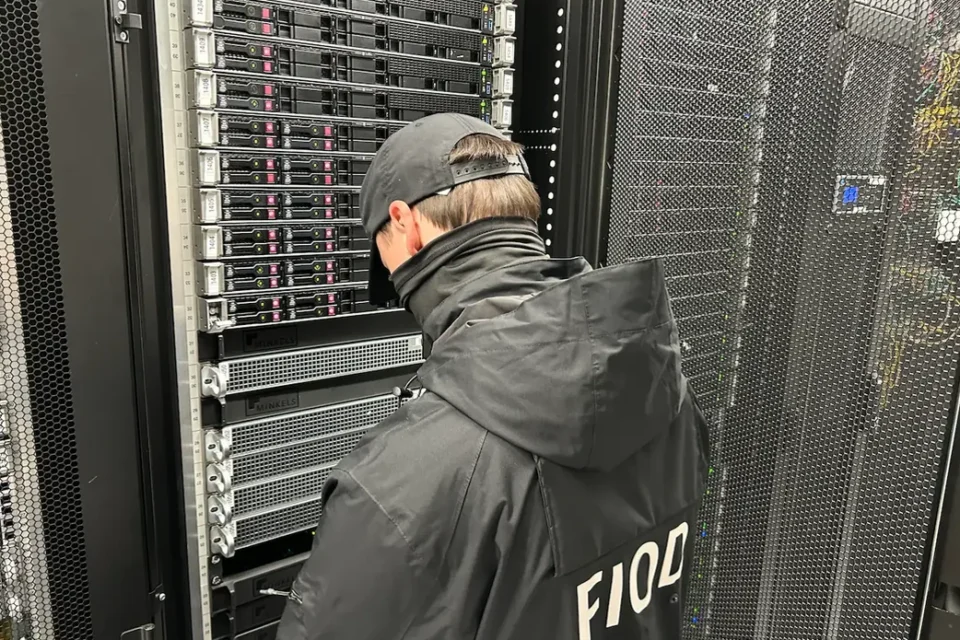

In a major escalation against the "bulletproof" hosting industry, Dutch authorities have dismantled a critical piece of digital infrastructure allegedly leveraged by Russian intelligence for cyber warfare and disinformation campaigns across the European Union. On May 18, the Dutch financial crimes agency, FIOD (Fiscale Inlichtingen- en Opsporingsdienst), arrested two key figures behind a network of hosting providers that investigators claim acted as a "digital staging ground" for hostile state actors.
The suspects—a 57-year-old Amsterdam resident identified as Youssef Zinad and a 39-year-old native of Russia residing in The Hague, Andrey Nesterenko—are accused of violating international sanctions. Prosecutors allege that these men provided the technical backbone for "Stark Industries Solutions," a sprawling hosting entity sanctioned by the EU last year for its role in facilitating cyberattacks that crippled critical infrastructure and influenced democratic processes within the bloc.
The Anatomy of the Investigation
The arrests mark the culmination of a high-stakes investigation that gained momentum following extensive reporting by KrebsOnSecurity and Dutch newspaper de Volkskrant. The investigation centers on the exploitation of Dutch hosting infrastructure to circumvent EU sanctions.
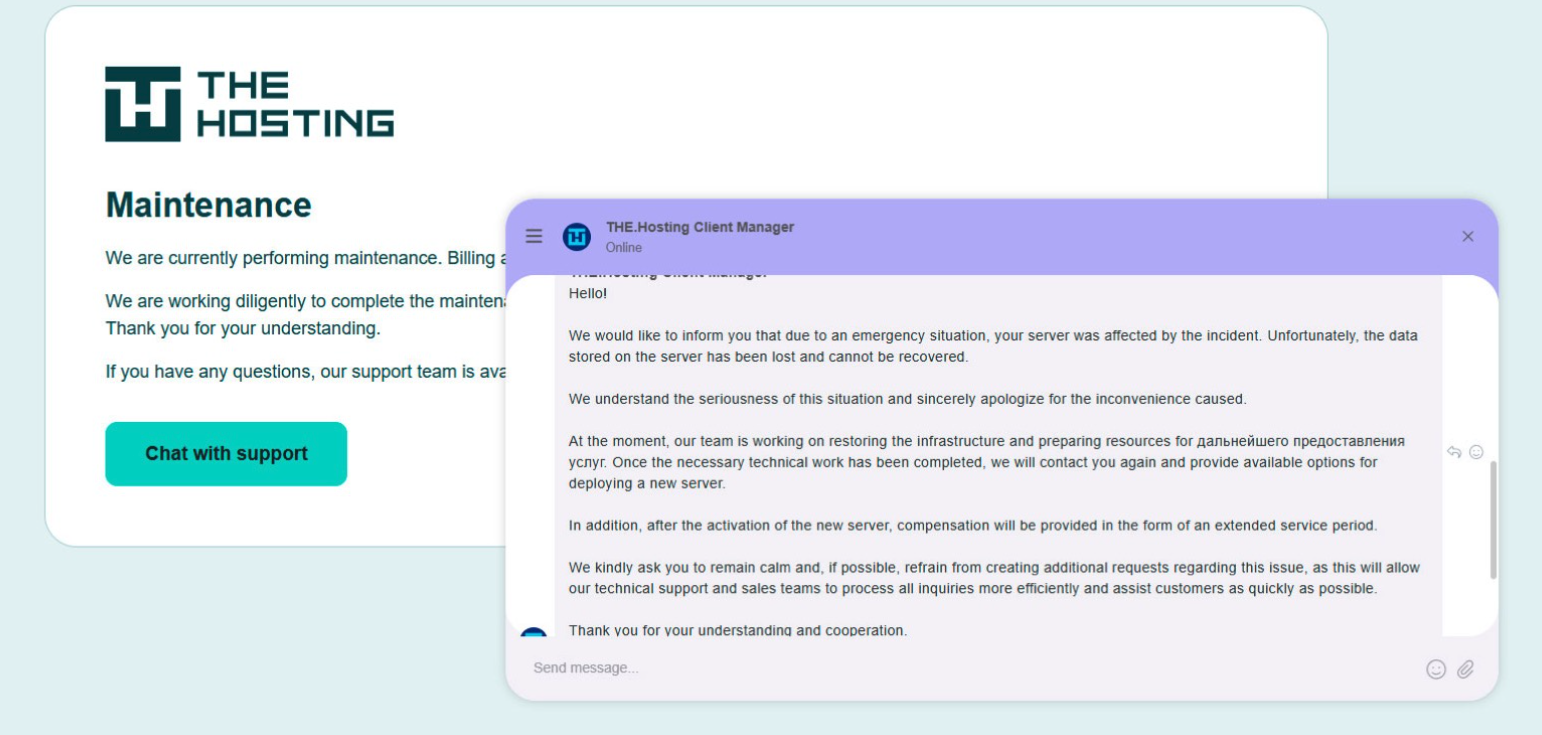
According to FIOD, the raid was swift and comprehensive. Investigators executed search warrants across three business locations in Enschede and Almere, alongside two high-security data centers in Dronten and Schiphol-Rijk. The haul was significant: officials seized laptops, encrypted mobile devices, and more than 800 physical servers. The immediate impact on the clients of these hosting providers was absolute; shortly after the raid, users of "the[.]hosting"—a subsidiary brand linked to the suspects—were greeted by an automated message informing them that their data had been lost and was irrecoverable due to the seizures.
The charges focus on the "making available of economic resources" to sanctioned entities. By maintaining the digital pipes—servers, connectivity, and routing—required for Russian-linked groups to operate, the suspects allegedly provided a lifeline to actors engaged in hybrid warfare.
A Chronology of Sanctions Evasion
To understand the scope of the operation, one must trace the evolution of Stark Industries Solutions. The entity burst onto the scene just weeks before the Russian invasion of Ukraine in February 2022. It quickly established itself as a primary source for massive Distributed Denial-of-Service (DDoS) attacks against European government institutions and a provider of proxy services for state-backed hacking groups.
- May 2024: KrebsOnSecurity publishes a deep-dive investigation identifying the Moldovan brothers Ivan and Yuri Neculiti and their company, PQHosting, as a major conduit for Stark’s traffic.
- May 2025: The European Union formally sanctions the Neculiti brothers and PQHosting for their role in Russia’s hybrid warfare.
- September 2025: A follow-up investigation reveals that the sanctions were incomplete. While PQHosting was neutralized, Stark Industries had migrated its remaining infrastructure to the Netherlands, relying on a provider called MIRhosting, operated by Nesterenko.
- Late 2025: Evidence emerges that assets were strategically transferred to a new entity, the[.]hosting, controlled by WorkTitans BV. This move was a calculated effort to bypass the May 2025 sanctions.
- November 2025: During the Danish municipal elections, data analysis links WorkTitans and MIRhosting to a surge in cyberattacks against Danish government bodies.
- May 18, 2026: FIOD conducts the coordinated raids in the Netherlands, arresting Nesterenko and Zinad and seizing the server farms.
Supporting Data: The Digital Fingerprints
The evidence linking these Dutch-based entities to Russian state objectives goes beyond mere coincidence. De Volkskrant analyzed network traffic logs between November 13 and 19, 2025, which coincided with Denmark’s municipal elections. The analysis identified WorkTitans and MIRhosting as the primary networks behind a wave of malicious activity directed at Danish democratic infrastructure.
The connection to Russian state interests is further cemented by the history of Nesterenko’s professional career. Born in Nizhny Novgorod, Nesterenko rose to prominence as a piano prodigy before pivoting to the tech sector. In 2004, he founded Innovation IT Solutions Corp., the parent company of MIRhosting. Notably, this firm was responsible for hosting stopgeorgia[.]ru, a "hacktivist" portal that coordinated cyberattacks against Georgia during the 2008 Russo-Georgian War—widely considered the first instance of a cyber-assault occurring in tandem with a kinetic military invasion.
The role of Youssef Zinad, while more obscured, is equally critical to the prosecution’s case. Despite Nesterenko’s claims that Zinad was merely an external contractor, evidence suggests a deep integration. Zinad held a @mirhosting.com email address, was listed as legal counsel for the firm in internal communications, and appeared on official business registration documentation for the Almere offices. His attempt to vanish—deleting LinkedIn profiles, ignoring press inquiries, and retreating to a secluded life—mirrors the behavior of an individual aware of the looming legal scrutiny.
Official Responses and Denials
In the wake of the arrests, the narrative from the suspects and their associated companies has been one of victimhood. MIRhosting released a formal statement on LinkedIn, vehemently denying that its services were utilized to influence the Danish elections.
"Based on our preliminary findings, there are no indications that the services over which we exercise control were actually used to influence the Danish elections," the company stated. They further argued that they had observed no spikes in network traffic and had received no abuse reports prior to the media coverage. MIRhosting maintains that it severed ties with the Neculiti brothers immediately following the May 2025 sanctions, characterizing the current allegations as "harmful and incorrect."
Nesterenko himself, responding via email, claimed that the transition to "the[.]hosting" was a standard business restructuring rather than a scheme to evade sanctions. "The hardware and customer portfolio had already been transferred to WorkTitans before the sanctions appeared," Nesterenko insisted. "Closing or damaging a legitimate Dutch infrastructure company will not stop cybercrime, but it will harm many people who have done nothing wrong."

Implications for Global Cybersecurity
The Dutch crackdown represents a pivotal moment in the fight against "bulletproof" hosting—a business model that thrives on turning a blind eye to the malicious activities of its clients. By treating hosting providers as conduits for sanctions evasion, the Dutch authorities are signaling a new, more aggressive phase in the battle against hybrid warfare.
The Erosion of "Legal" Anonymity
For years, hosting providers have hidden behind the defense of being "neutral pipes," arguing that they cannot be held responsible for the content or activities of their clients. The arrests in the Netherlands suggest that this shield is crumbling. If a hosting provider knowingly or through extreme negligence provides a staging ground for state-sponsored cyber-aggression, they are increasingly being viewed by the judiciary as accomplices rather than service providers.
The Challenge of Attribution
The case also underscores the difficulty of attribution. Because infrastructure is often layered—with proxy services, VPNs, and multiple hosting entities involved—tracing an attack to a specific entity requires international cooperation and granular data analysis. The success of the Dutch operation relied on the intersection of investigative journalism and financial intelligence, a partnership that may become a blueprint for future probes.
The Future of Sanctions Enforcement
The fact that Stark Industries successfully migrated its operations to a new entity (the[.]hosting) even after being sanctioned highlights a major flaw in current enforcement mechanisms. Sanctions must be applied not just to the entity name, but to the underlying technical infrastructure and the individuals who maintain the routing, IP blocks, and physical server farms.
As the legal proceedings against Nesterenko and Zinad unfold, the tech industry will be watching closely. The outcome of this case will likely determine whether European nations continue to adopt this aggressive stance toward infrastructure providers that facilitate the activities of hostile foreign powers. For now, the silence at the data centers in Dronten and Schiphol-Rijk serves as a stark reminder that in the digital age, the physical location of a server can have profound consequences for the stability of international borders.